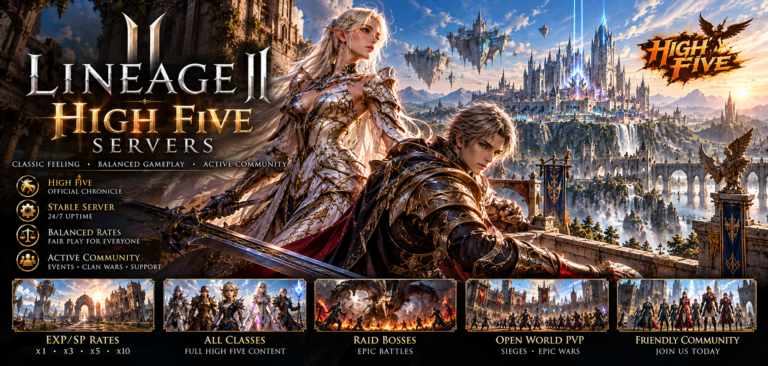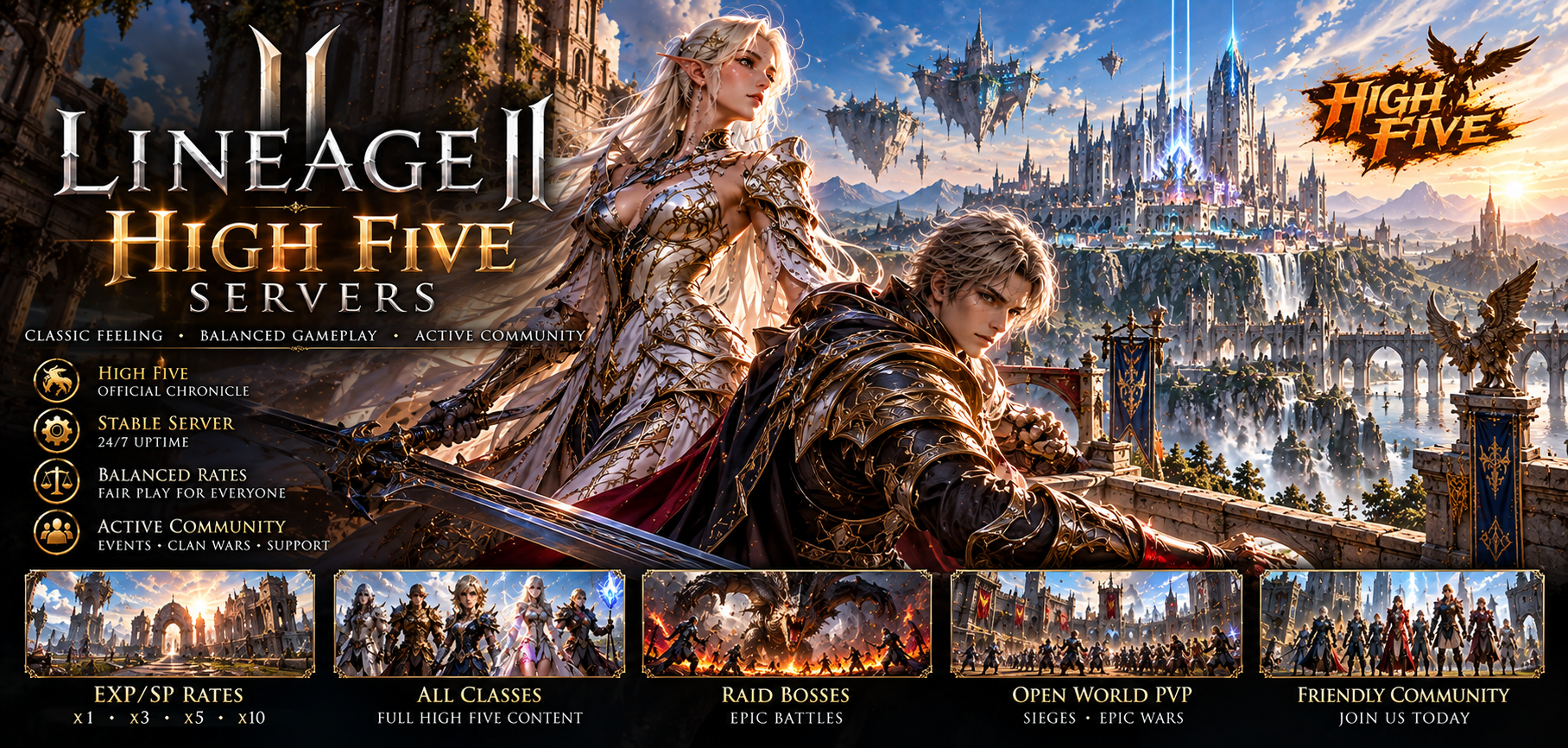
There is a particular feeling that comes with l2 classic servers. Progress tends to feel deliberate, familiar locations remain relevant for longer, and even ordinary upgrades can carry more weight than they would in a faster version of the game.
When progress takes time, small things matter
One of the defining features of Classic is its pace. A character does not suddenly become powerful after a few short sessions. Levels take work, equipment requires planning, and certain goals may sit on the horizon for quite a while.
That sounds inconvenient until you remember why many players enjoy it.
When an upgrade requires effort, receiving it feels different. A new weapon is not simply another item added to an inventory. It may represent several evenings of farming, a carefully saved amount of currency, or a lucky drop that finally solved a problem.
The same applies to locations. In faster versions, an area can become irrelevant almost as soon as the player reaches the next level range. Classic tends to give places a longer life. You return to familiar hunting grounds, recognize other players, and gradually learn which areas are worth the time.
There is a downside, of course. Slow progression can become frustrating when real life leaves little time for gaming. A player who can only play for an hour in the evening may not want every improvement to require a long-term commitment.
Classic is therefore less about speed and more about whether the journey itself is enjoyable.
The world feels more connected to other players
A strange thing happens when progression slows down: other people become more important.
A character may not be able to handle every situation alone, so finding a good party matters. Certain classes become valuable because of what they contribute rather than simply how much damage they can deal. A familiar support player can become someone you actively look for when logging in.
This social dependence creates a different atmosphere on active lineage 2 classic servers. Players see each other repeatedly because they spend more time in the same locations. Rivalries can develop naturally. So can friendships.
A hunting spot might be quiet one evening and fiercely contested the next. A group that seemed insignificant a week ago can become a serious competitor later. The world has a memory because the players themselves remember what happened.
That is difficult to reproduce through automated systems or scripted events. It comes from repetition and interaction.
Even the economy benefits from this slower rhythm. Materials that might be worthless in a high-speed environment can remain useful because players are constantly trying to improve equipment. Crafting and trading become parts of everyday gameplay rather than activities that are quickly replaced by something more powerful.
Classic rewards patience, but it also tests it
There is a clear contrast between Classic and versions designed around rapid progression. The former asks the player to accept that some goals will take time.
For one person, that is exactly the attraction. They enjoy watching a character develop gradually and having several long-term objectives at once. Another player may reach the same point and wonder why a simple upgrade took so many evenings.
Neither reaction is unusual.
The important distinction is whether the time investment feels meaningful. Repetition becomes much easier to tolerate when something interesting can happen during it. Meeting another party, discovering a profitable location, getting an unexpected drop, or becoming involved in a small conflict can turn routine farming into part of the story.
Without those moments, even a well-designed progression system can feel like a chore.
This is also why l2 classic communities can differ so much from one another. The underlying mechanics may be similar, but the people playing them determine how lively the world feels. A busy server can turn a familiar hunting area into a social space. A quiet one can make exactly the same location feel empty.
Returning to an older style of play
Many players approach Classic because they remember an earlier version of Lineage 2. But nostalgia can be complicated.
You may remember spending hours developing a character and think, “I want that again.” Then you actually do it and realize that your schedule has changed. The same amount of grinding that once felt normal may no longer fit comfortably into an evening.
That does not necessarily make Classic unsuitable. It simply changes how you approach it.
Some players stop worrying about reaching the top quickly. They play for a few hours, make steady progress, talk to their clan, and leave the game knowing they have moved forward. Others become deeply invested in the competitive side and are willing to dedicate much more time to it.
There is something satisfying about having goals that cannot be completed immediately. A character that takes weeks or months to develop can accumulate a history along the way. The eventual result feels personal because you remember how it was built.
That may be the real reason l2 classic servers continue to attract players. Classic is not necessarily convenient, and it does not try to make every part of progression effortless. Instead, it gives time a role in the game.
When a familiar world still manages to make a modest equipment upgrade feel exciting, the age of the underlying concept stops being particularly important. l2 classic works because the journey still has enough weight to make players care about where their characters will be tomorrow, not just where they are today.
About the Author