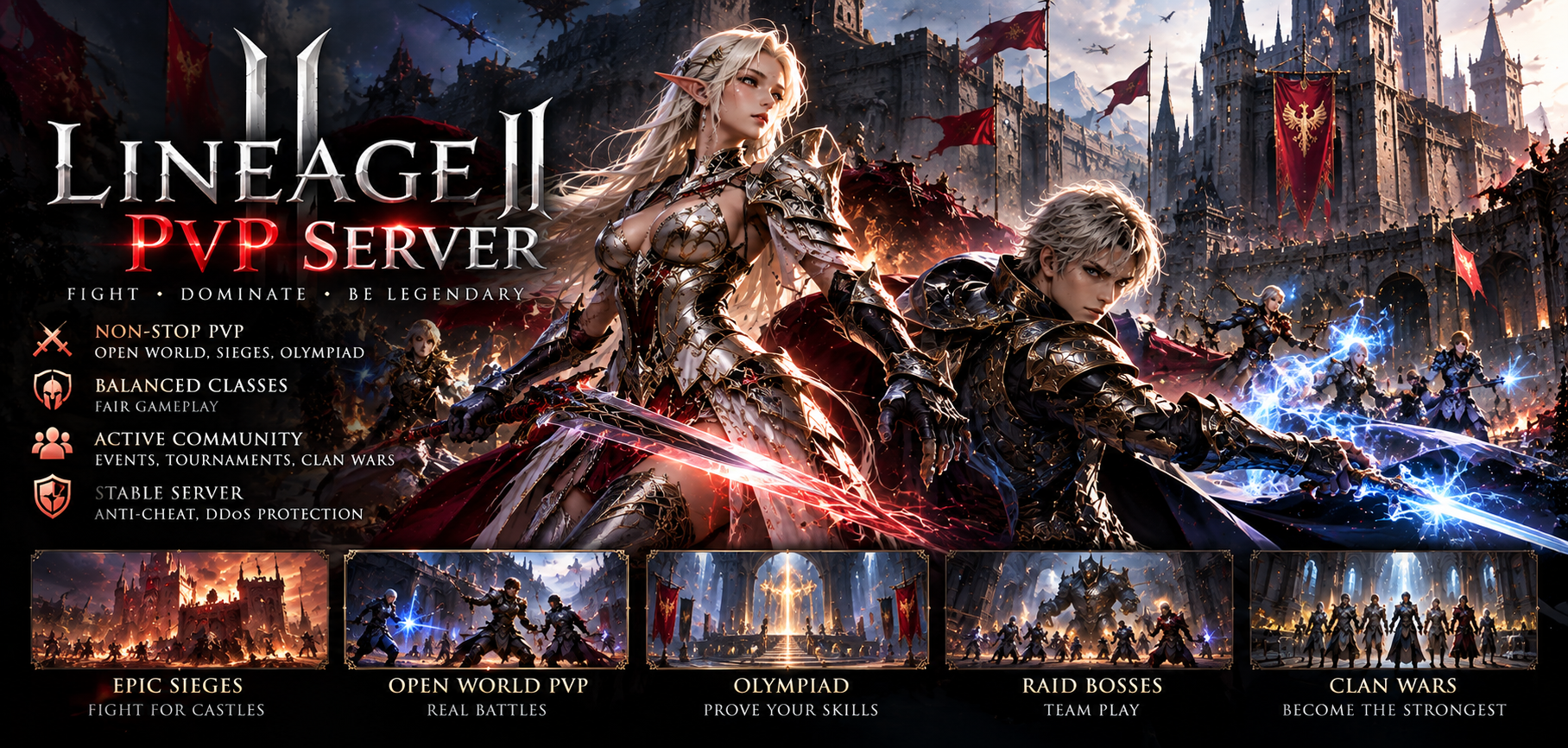
The appeal of l2 pvp servers is not simply that players can fight each other. What makes PvP interesting is the reason behind the conflict: territory, resources, reputation, clan rivalry, or simply the chance to change the balance of power on a server.
Fighting is easy; having something worth fighting for is not
A PvP server can technically offer constant combat and still become boring surprisingly quickly. If players fight for no particular reason, battles start to feel repetitive. The more interesting conflicts usually happen because both sides have something they genuinely want.
A valuable hunting location is a good example. One clan arrives because the area provides useful resources. Another group is already there and has no intention of leaving. Neither side needs a scripted event to create tension. The situation develops naturally.
The same thing can happen around raid bosses or important territory. Suddenly, preparation matters. Players begin checking who is online, discussing tactics, organizing groups, and trying to predict what the opposing clan will do.
That is when PvP becomes part of the world rather than a separate activity.
There is also a psychological difference between winning a random duel and winning a battle that affects your clan. The second victory tends to be remembered. So does the defeat.
The strongest character is not always the most important player
One of the misconceptions about lineage 2 pvp servers is that everything eventually comes down to equipment. Gear certainly matters, but large-scale PvP has never been that simple.
Positioning can decide a fight. So can communication. A well-organized group can sometimes outperform a stronger collection of individual characters simply because everyone understands what they are supposed to do.
This becomes particularly obvious during larger conflicts. Players need to recognize targets, protect vulnerable characters, react to unexpected attacks, and adapt when the original plan stops working.
A powerful character who constantly acts alone may contribute less than someone who understands the needs of the group.
That is part of what makes clan-based PvP so compelling. Your own character is only one piece of a much larger system. A victory may depend on dozens of small decisions made by different people at almost the same moment.
And sometimes things simply go wrong.
A player disconnects. Someone attacks too early. A group arrives from an unexpected direction. The enemy changes tactics. Those moments cannot be perfectly planned, which is exactly why successful battles can feel so satisfying.
A real PvP community needs more than constant fighting
Not every player wants to spend every minute in combat. That may sound strange when discussing PvP, but periods without fighting are important too.
Players need time to farm, trade, upgrade equipment, organize clans, and prepare for the next conflict. Without those quieter parts, the competitive side loses some of its meaning.
Imagine a server where two major clans are constantly fighting. At first, it sounds exciting. After a while, however, both sides need resources, new equipment, and opportunities to rebuild. If there is no space for that, players can simply become exhausted.
The best competitive environments usually have a rhythm. There are calm evenings, sudden confrontations, larger planned battles, and unexpected encounters between them.
Economy plays a role here as well. When players need resources and other players can provide them, ordinary activities become connected to PvP. A person farming materials may not participate in a major battle that night, but what they collect can still contribute to their clan’s ability to compete later.
That connection gives everyday gameplay a purpose.
It also creates different roles within a community. Some players are natural leaders, others are excellent fighters, while someone else may know the economy inside out. A successful clan rarely consists of identical personalities.
What keeps competition from becoming predictable?
The most interesting lineage 2 pvp server is rarely the one where the same clan wins everything.
Once the outcome of every major conflict becomes obvious, players have less reason to remain involved. Smaller groups stop challenging established powers, and the political side of the game gradually becomes static.
A little uncertainty is healthy.
Perhaps a smaller clan forms an unexpected alliance. Maybe an established group loses several important players. A previously quiet guild suddenly becomes strong enough to contest a major location. Even a temporary disagreement between allies can change the situation.
These shifts give the server a sense of movement.
Players begin remembering not only victories but turning points. Someone who was unknown becomes a respected opponent. A clan that seemed unbeatable finally loses. Two groups that spent months fighting eventually cooperate against a common rival.
None of this can be reduced to a server setting.
The technical foundation matters, of course, but the long-term experience comes from what players do with it. A PvP environment becomes memorable when battles have consequences, relationships develop over time, and the balance of power can actually change.
That is why l2 pvp servers can feel so different even when they use similar mechanics. One may become a repetitive cycle of random fights, while another develops its own rivalries, alliances, economic pressure, and history.
In the end, the best lineage 2 pvp servers are not necessarily the most aggressive ones. They are the ones where conflict means something. You fight because there is a reason to fight, prepare because tomorrow’s battle may matter, and remember the people on the other side because you know you will probably meet them again.